
How To start a medical waste disposal plant?
How To start a medical waste treatment site? follow these steps:
Starting a medical waste disposal business involves several critical steps, from understanding regulations to setting up operations. Here’s a comprehensive guide:
1. Research and Planning
Market Research:
- Demand Assessment: Identify the demand for medical waste disposal in your target area.
- Target Market: Determine your potential clients, such as hospitals, clinics, and laboratories.
Business Plan:
- Executive Summary: Outline your business concept and goals.
- Market Analysis: Detail your research findings and target market.
- Services Offered: Define the types of medical waste disposal services you’ll provide (e.g., Advanced Microwave Technology).
- Financial Projections: Include startup costs, revenue forecasts, and funding needs.
- Operational Plan: Describe your facility setup, staff requirements, and procedures.
2. Legal and Regulatory Requirements
Regulations:
- Local Regulations: Check local regulations regarding medical waste management.
- State and Federal Regulations: Comply with state and federal laws, such as those from the EPA, OSHA, and DOT.
- Waste Management Standards: Follow guidelines for handling, treatment, and disposal of medical waste.
Licenses and Permits:
- Business License: Obtain a general business license.
- Special Permits: Acquire specific permits for handling and processing medical waste.
- Environmental Permits: Secure permits related to air and water quality if required.
3. Funding and Financial Planning
Funding Options:
- Loans: Consider bank loans or SBA loans.
- Investors: Seek investment from venture capitalists or angel investors.
- Grants: Explore grants available for environmental or health-related businesses.
Financial Management:
- Budgeting: Prepare a detailed budget covering startup costs and operational expenses.
- Accounting System: Implement an accounting system for financial management.
4. Facility Setup
Location:
- Site Selection: Choose a location that complies with zoning laws and is convenient for clients.
- Facility Design: Plan for areas such as waste reception, sorting, treatment, and storage.
Equipment:
- Treatment Technologies: Invest in microwave devices, shredding system, and other equipment eg auto cleaning line.
- Safety Measures: Install safety systems like ventilation, spill containment, and personal protective equipment (PPE).
5. Operational Procedures
Waste Handling Protocols:
- Collection and Transport: Develop procedures for safe collection and transport of medical waste.
- Sorting and Treatment: Establish methods for sorting and treating different types of waste.
- Disposal: Implement protocols for the final disposal of treated waste.
Safety and Compliance:
- Employee Training: Train staff on safety practices, waste handling, and regulatory compliance.
- Emergency Procedures: Develop and implement emergency response plans.
6. Staffing
Hiring:
- Recruitment: Hire qualified personnel for roles such as waste handlers, drivers, and administrative staff.
- Training: Provide training on regulatory requirements, safety protocols, and operational procedures.
7. Marketing and Business Development
Marketing Strategy:
- Networking: Build relationships with healthcare facilities, labs, and other potential clients.
- Online Presence: Develop a website and utilize social media to promote your services.
- Advertising: Use targeted advertising to reach your market.
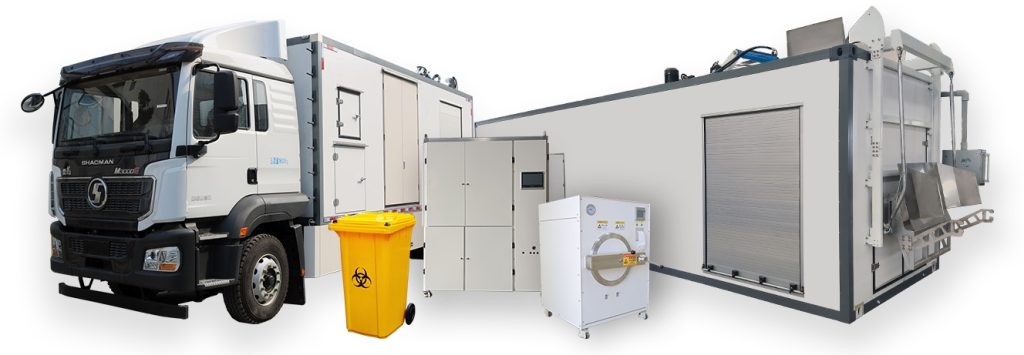
Starting a medical waste disposal business now, we highly recommend considering a Centralized Medical Waste Treatment Plant as your flagship project. If you have strong local government or hospital connections, medical waste treatment is one of the most profitable, recession-proof environmental businesses today, offering an exceptionally fast payback period.
PIONEER – Medical waste management – Help you reduce 30% costs,manufacturing top smart machines that can shred and treat infectious medical waste by using microwave technology, 1-3-5-10tons/day, for more: www.pioneer-medical-waste.com
PIONEER adopts the most Advanced Microwave Technology. We supply both Mobile Medical Waste Solutions 5tons self-generating power truck and also have small-scale equipment such as 20KG/H, which is particularly suitable for military hospitals and small clinics. There are also centralized processing workstations capacity ranging from 1-3-5-10TON/DAY, which are suitable for Medium and Large-sized hospitals. This market has a large gap and is a very good market. If you are interested, please send an inquiry. We share detail videos and offer one-stop services